

Click on the images below to see a larger version
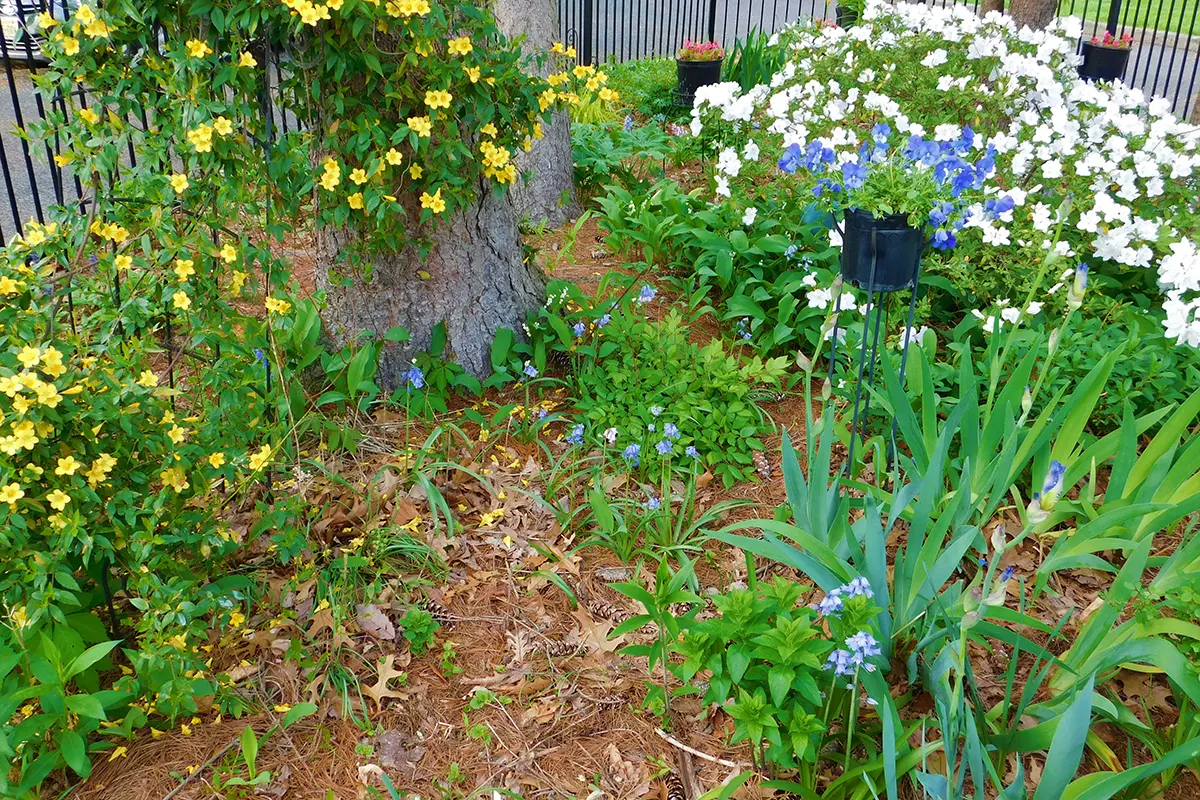
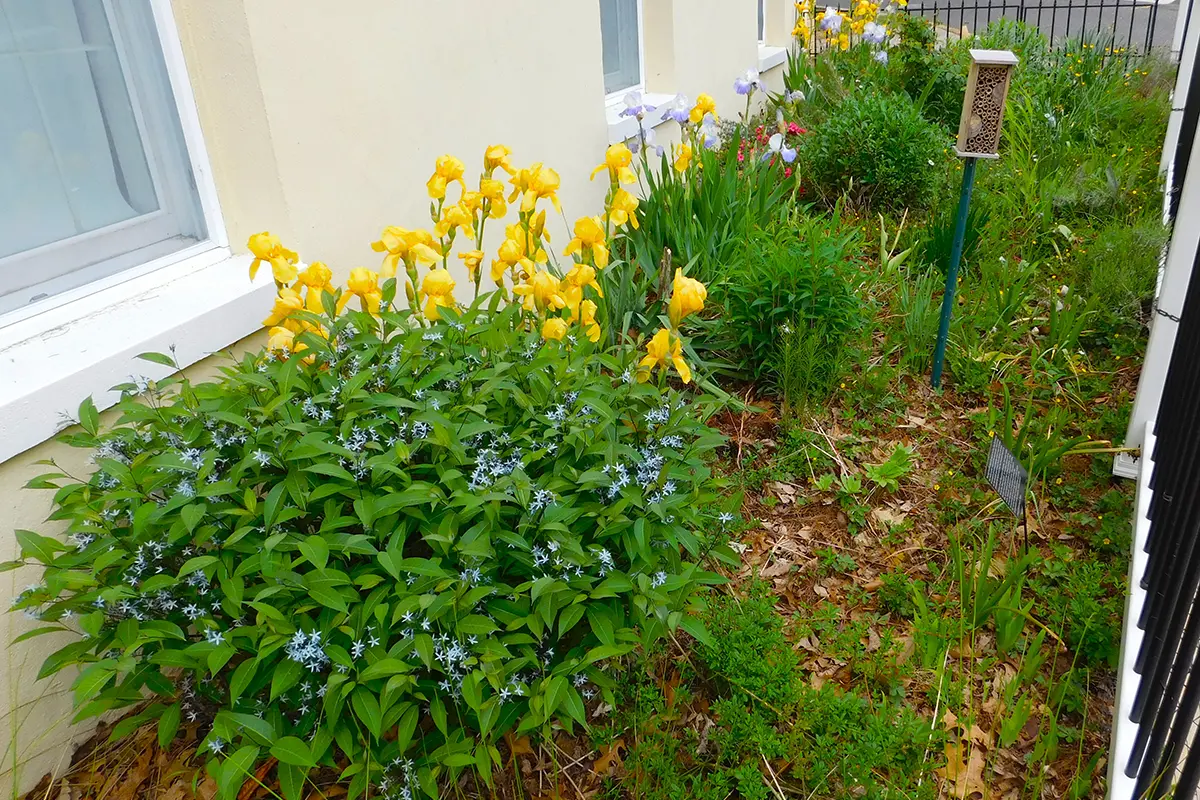
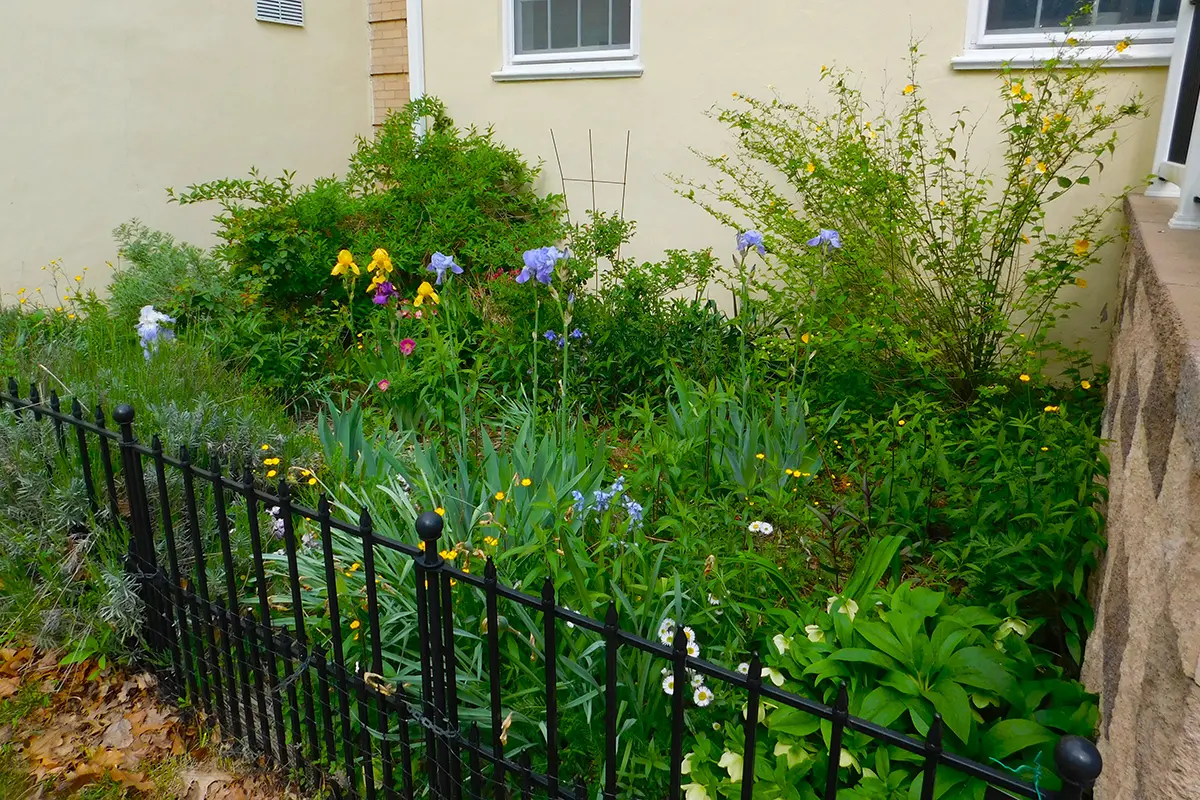
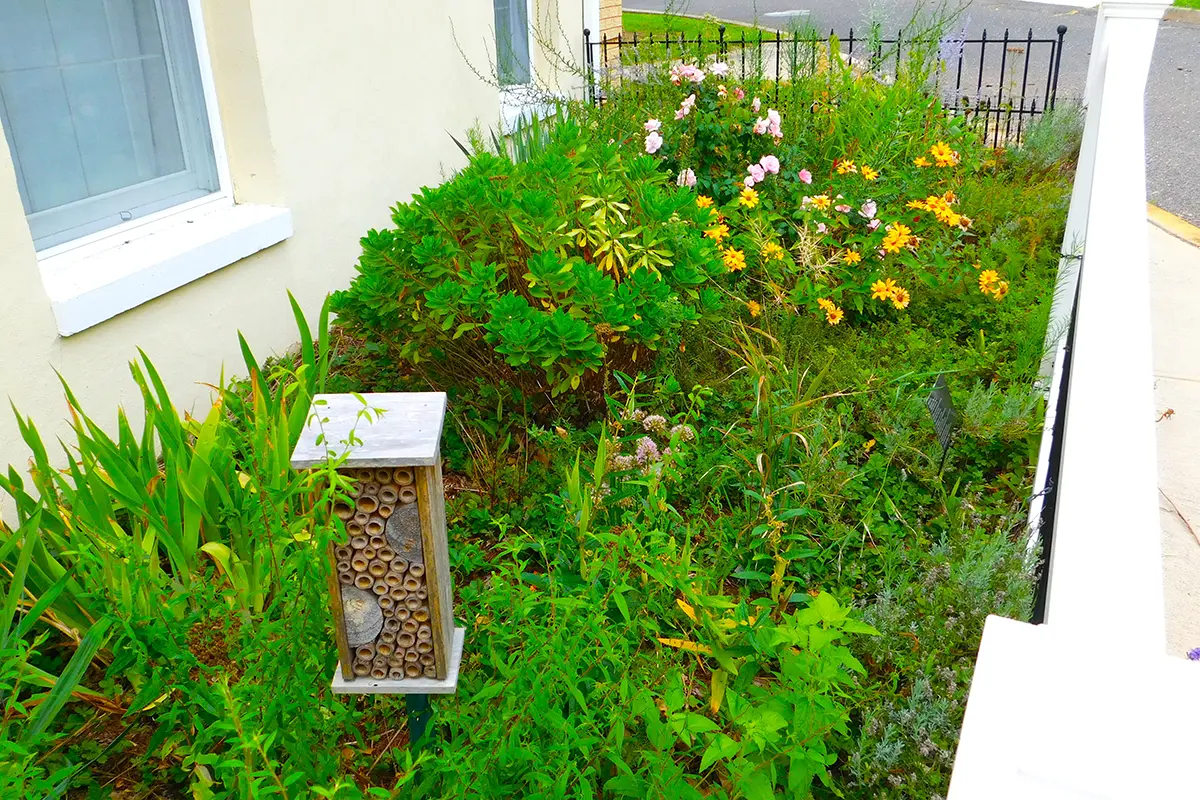
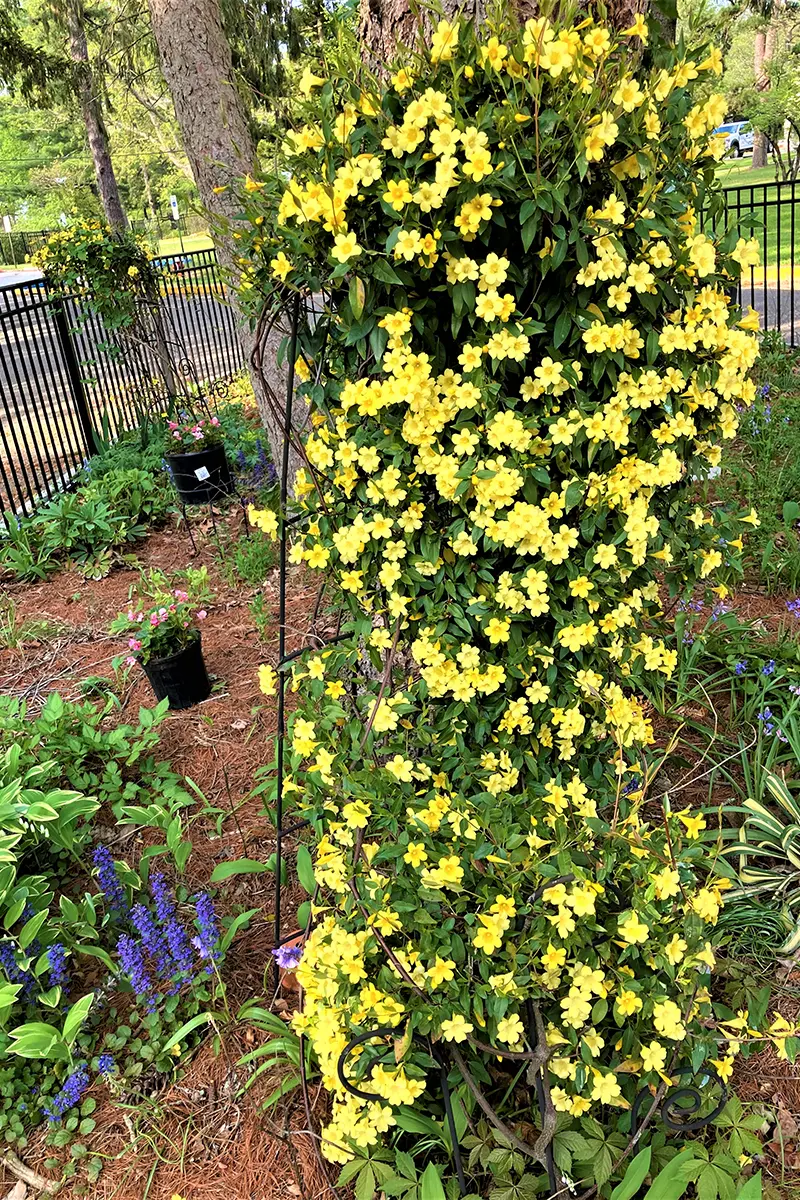
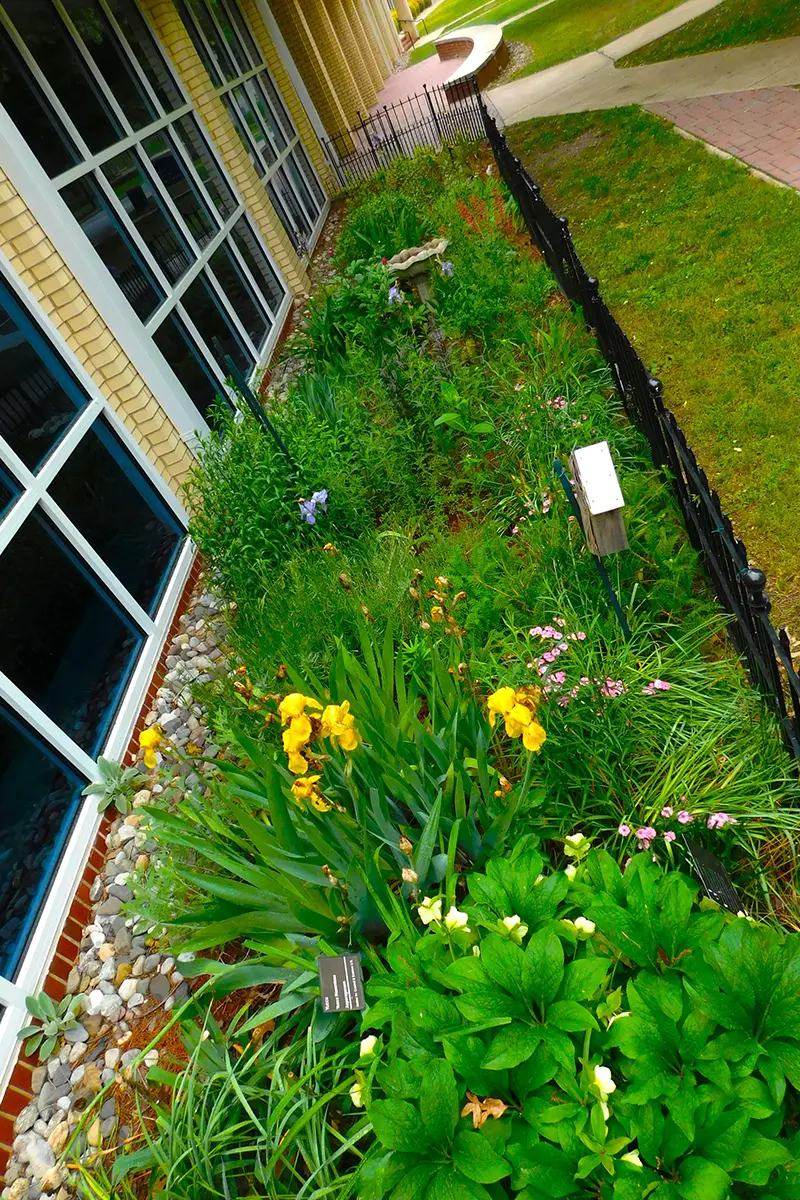
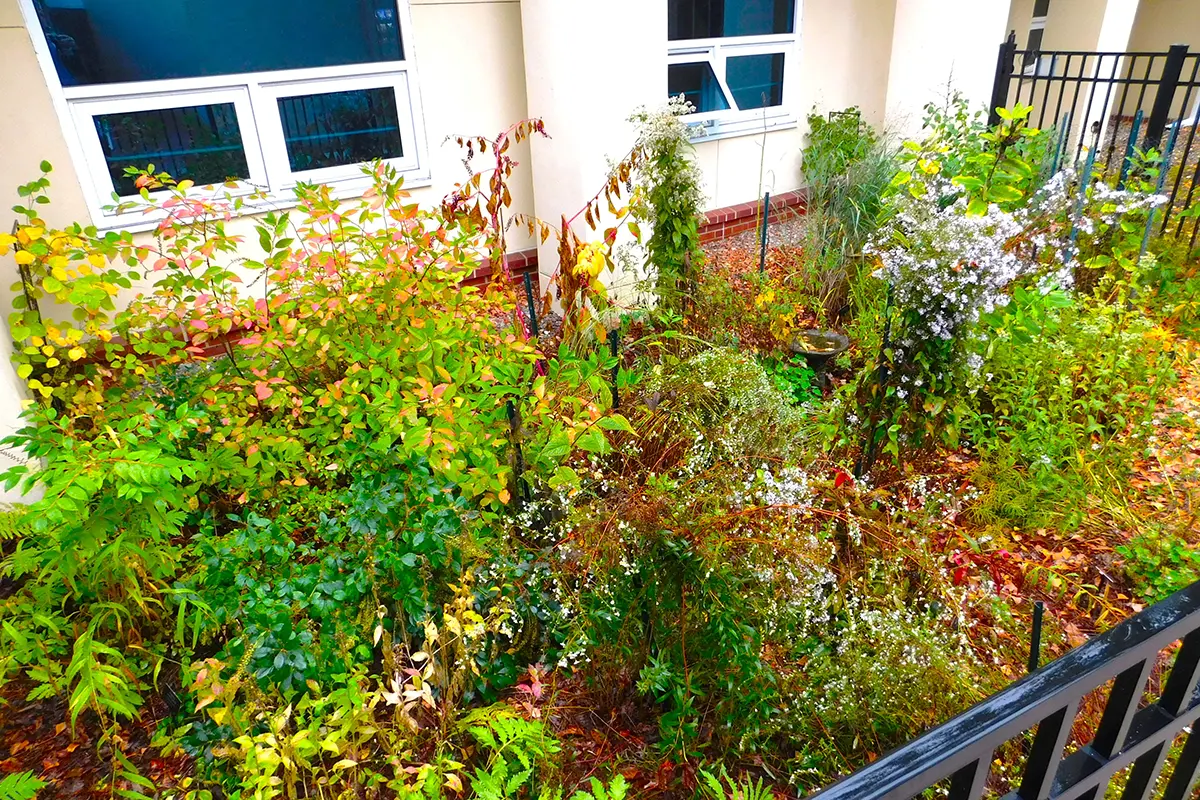
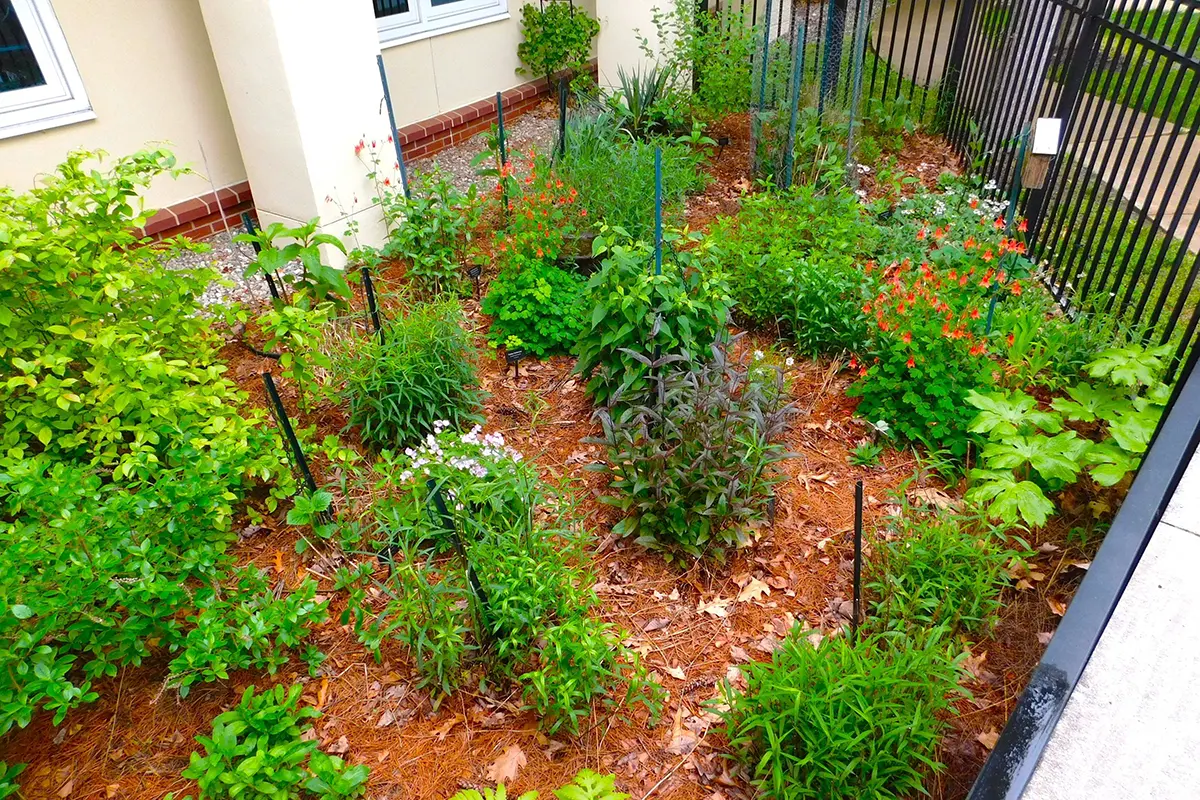
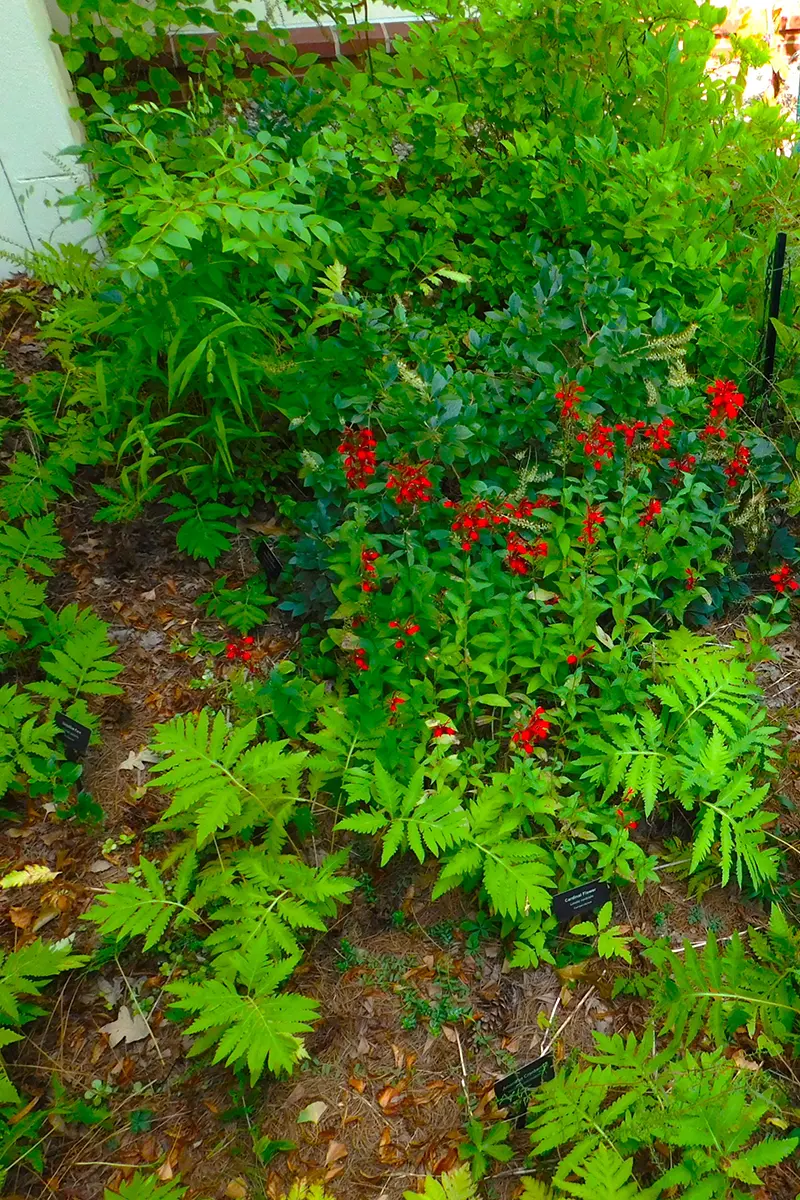
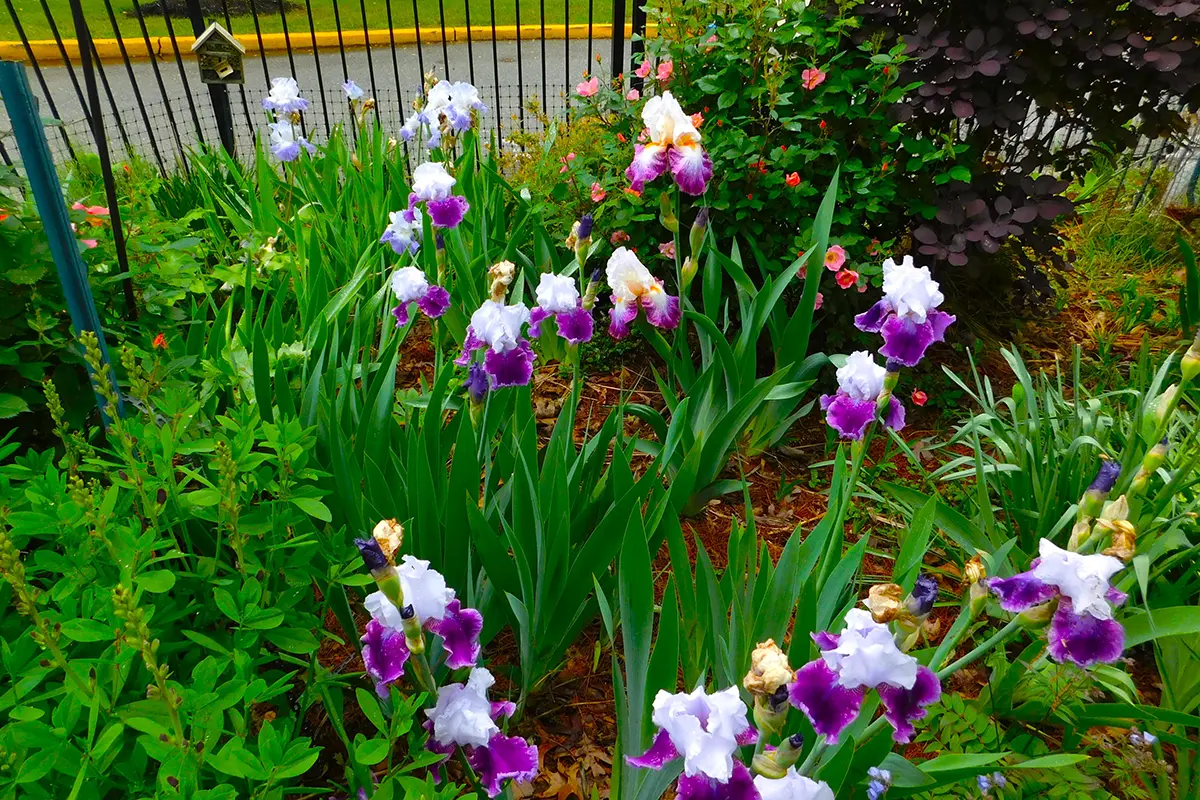
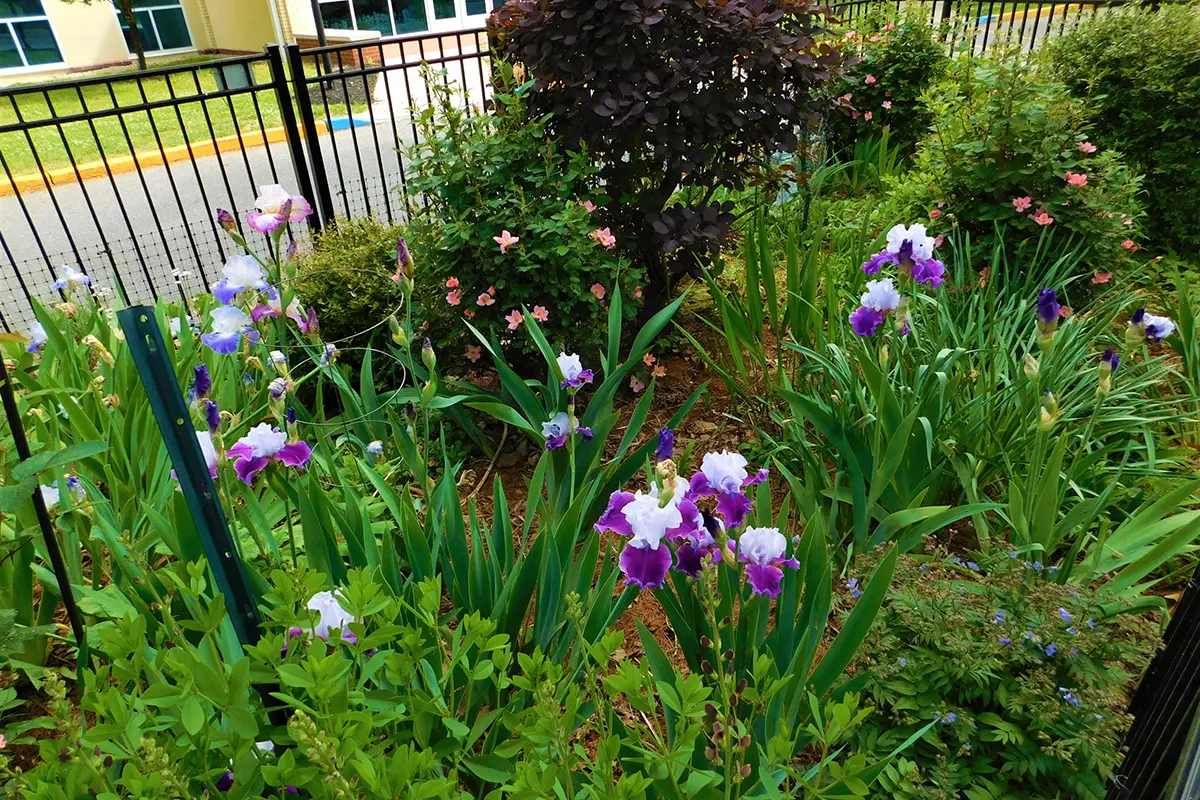
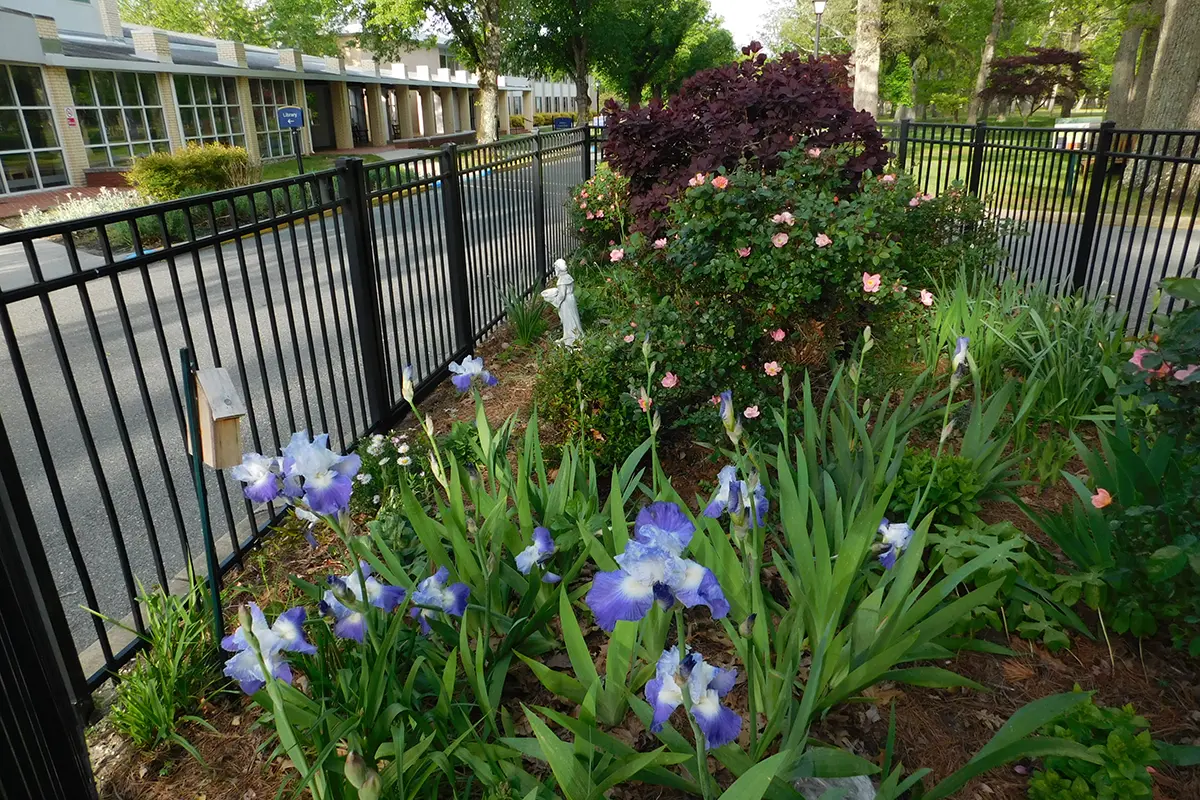

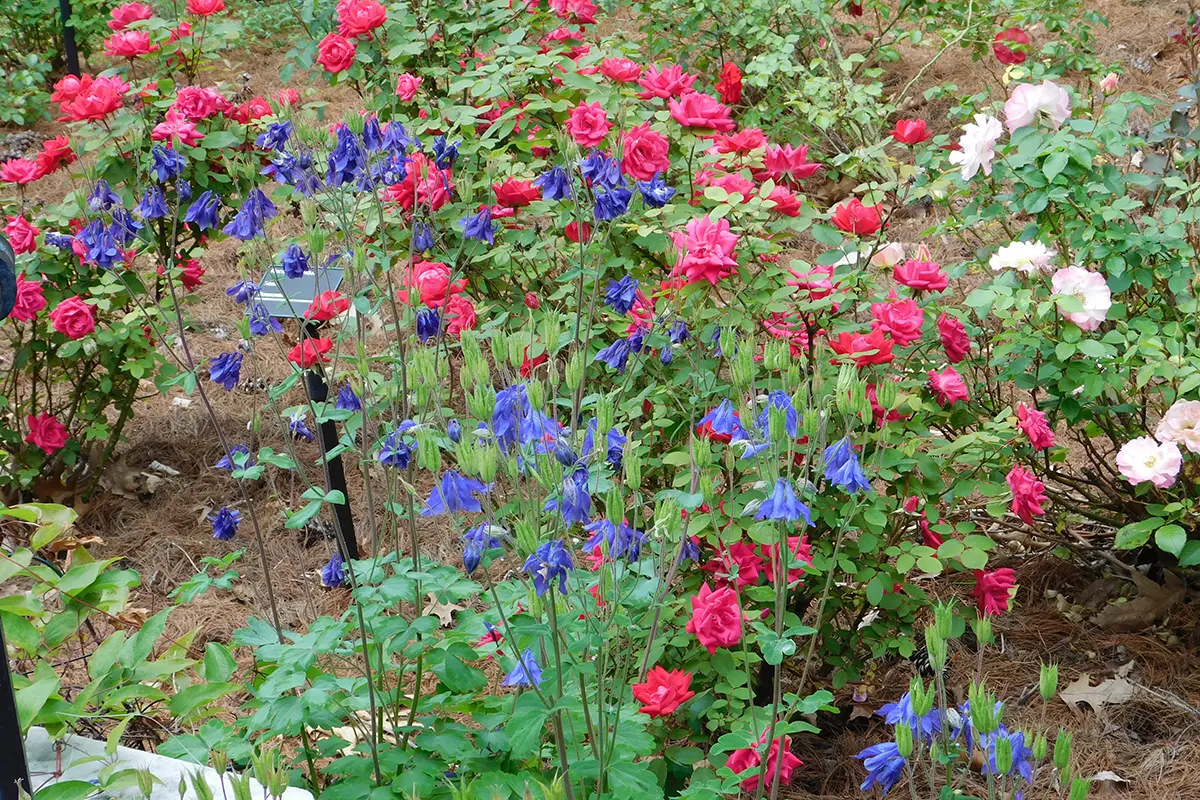
Each garden has a unique history and environment and therefore a different plant collection and character. The Native Plants of New Jersey garden is packed with a huge range of plants of all types and forms that are found naturally in New Jersey. Around the corner, the library arcade garden has a rich collection of spring bulbs, irises, goldenrods, asters and lavender. Next to it, the unfenced Library Garden’s Russian sage, yucca, Nandina, lavender, cactus, daffodils, irises and lamb’s ears thrive despite being open to the campus’s deer population. Across from the library garden, the Puny Garden (built by Sister Mary Bilderback, RSM) offers all-season flowering with a focus on roses and irises.
The Oak Knoll native plant garden houses grasses, groundcovers, perennials and shrubs found naturally in the large shady vast open woodland that constitutes Oak Knoll.
Pollinator Gardens around Farley Center, Mercedes and south of Mercy Hall each have a different plant collection adapted to each area’s light and soil conditions.
The Rain Garden is fed by water from the Raymond Hall roof and has a diverse, dense mixture of species that flower in summer and fall, such as native mints, a range of goldenrods, boneset, thoroughwort, Hibiscus, Senna, and ironweed.
The most notable plants in the Chapel Garden (created by Sister Maria Cordis Richey, RSM) are the hundreds of spring bulbs, along with hellebores, irises, lilies, Camellia and Carolina jasmine. Nearby, the Jose Lopez Garden has shade adapted perennials and shrubs whose planting was funded by Jose Lopez in memory of his wife, Rose.
Enjoy the plethora of nature-focused poetry written by GCU faculty, staff and students in many of these gardens.
Welcome to the new georgian.edu!
We’ve redesigned our website to make it easier to explore Georgian Court. Some sections are still being completed, and we’re continuing to add new imagery and make improvements in the coming weeks. Thanks for your patience as we put the finishing touches on your new website experience.