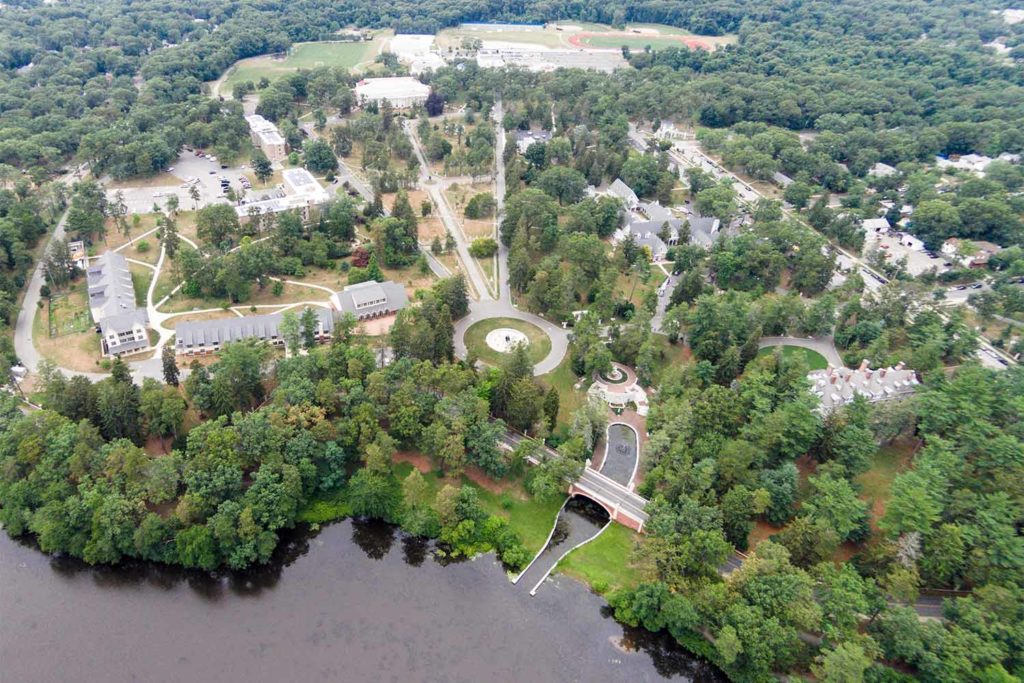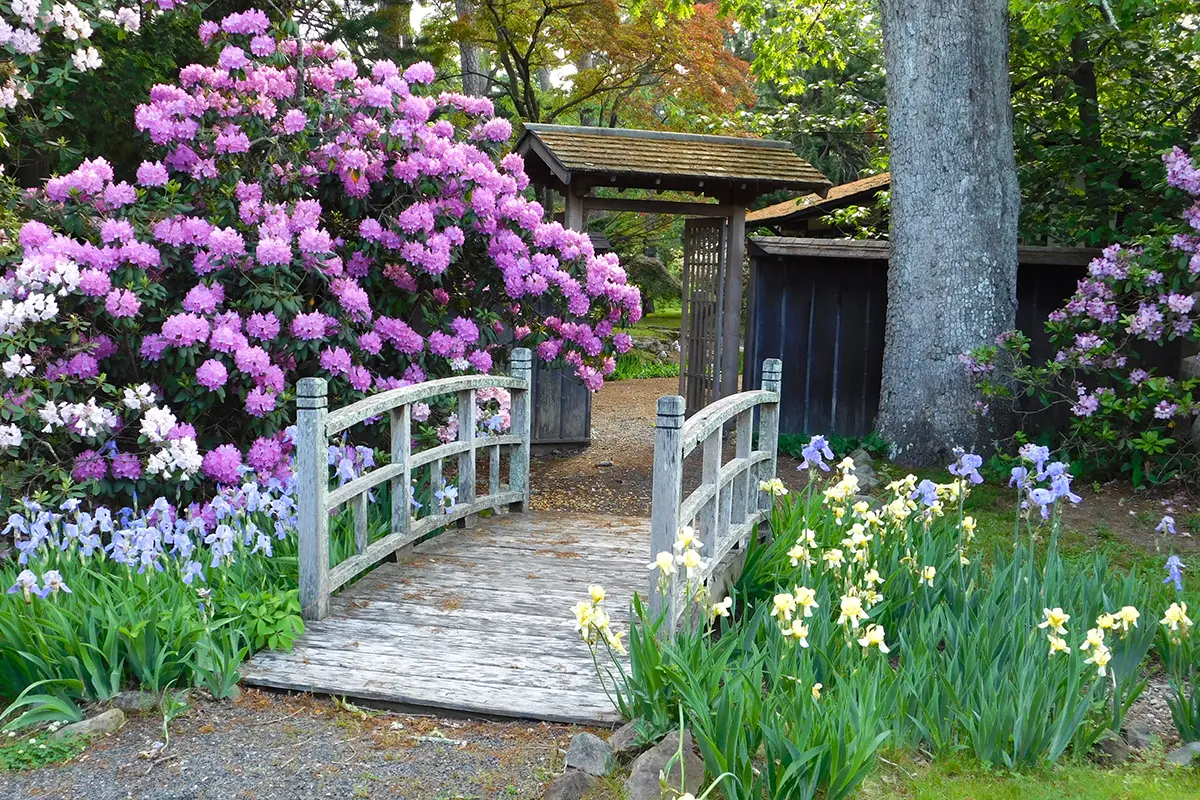
On any given day at Georgian Court University, students hurry between classes beneath towering oaks, visitors wander quiet garden paths, and faculty pause—often without realizing it—inside one of New Jersey’s most distinctive arboretums. Spread across nearly 100 acres of the historic Lakewood campus, the Sister Mary Grace Burns Arboretum is not a separate destination tucked behind gates or signage; it is living, breathing, and evolving alongside the university community it serves.
Established in 1989 and rooted in landscapes designed nearly a century earlier, the arboretum is home to approximately 2,200 trees and shrubs representing more than 190 species. Native Pine Barrens flora coexist with nonnative and ornamental plantings introduced during the Gould estate era, creating a collection that is at once scientifically valuable, historically rich, and quietly awe-inspiring.
In December 2025, Georgian Court University received confirmation that the Sister Mary Grace Burns Arboretum had once again been reaccredited at Level II by ArbNet, an international arboretum accreditation program. The renewal, which is valid for another five years, recognizes both the quality of the arboretum’s woody plant collection and the careful documentation, educational use, and long-term stewardship that define it.

From Estate Grounds to Educational Resource
Long before it was an arboretum, the land that now comprises Georgian Court University was the winter estate of George Jay Gould, son of railroad tycoon Jay Gould. Beginning in 1896, renowned architect Bruce Price transformed the property into a Georgian-style country estate, designing the mansion, outbuildings, and three of the four signature gardens that remain today: the Sunken Garden, the Italian Garden, and the Formal Garden. The fourth, the Japanese Garden, was designed by master landscape architect Takeo Shiota as a birthday gift from Gould to his wife, Edith.
The gardens were built to harmonize with the natural landscape, integrating existing Pine Barrens trees into formal European and Japanese designs. When sandy local soils proved unsuitable for exotic plantings, thousands of train carloads of rich loam were brought in to support the vision. The result was a rare landscape where native pinelands species and carefully curated ornamental trees have grown side by side for generations.
When the Sisters of Mercy purchased the estate in 1924 and established Georgian Court College, now Georgian Court University, the grounds became a setting for learning. In 1985, the campus was designated a National Historic Landmark. Just four years later, it would become a formal arboretum.
“Why Can’t We Call It an Arboretum?”
The creation of the Sister Mary Grace Burns Arboretum began with a question and a leap of faith.
Mary Bedell Stockton ’68, an alumna, longtime biology faculty member, and Georgian Court’s first IT director, recalls a conversation in the biology department that sparked the idea. Colleagues, including Sister Mary Jean McGivern, looked around at the campus grounds and wondered aloud why Georgian Court couldn’t claim what it already had.
“Other colleges were calling their campuses arboretums, and we were sitting on something that was already remarkable,” Stockton recalls. “Someone finally said, ‘Mary, why don’t you do it?’ And I said yes—without really knowing what that meant.”
What transformed the campus into a recognized arboretum was not planting new trees, but creating the system that defines one: a comprehensive record of woody plants for research, instruction, and public service.
Stockton recruited four biology research students—Audrey Wendolowski ’90, Maryann Smith ’90 and ‘93, Debra Unkow ’89, and Karen Hopson ’90—who spent months identifying, mapping, and labeling trees across campus. Using a grid system, each tree was plotted and tagged with its common name, scientific name, plant family, and nativity, documenting where each species was originally founded. It was meticulous, hands-on work, conducted through spring and summer, and it laid the foundation for everything that followed.
“What made it an arboretum was the record system,” explains Michael F. Gross, Ph.D., professor of biology, associate provost for academic program development, and current director of the arboretum. “Most of the trees were already here, many of them planted during the Gould era. Mary and the students did the hard work of documenting them so they could be studied, cared for, and used as a teaching resource.”
The Sister Mary Grace Burns Arboretum was formally dedicated on April 23, 1989.

Honoring a Teacher Who Loved the Trees
Naming the arboretum after Sister Mary Grace Burns was both fitting and deeply personal. A biology professor at Georgian Court from 1927 to 1968, Sister Mary Grace was known for both her scientific rigor and profound love of the campus and its natural beauty.
“She really lived it,” Stockton says. “She planted flowers, raked leaves, trimmed lawns—she took care of this place. She taught students how to identify plants, but also how to respect and care for what was here.”
That spirit of care continues today. Trees throughout the arboretum have been dedicated to the original student researchers, to Stockton herself, and to loved ones, including Stockton’s late husband, James E. Stockton. These quiet markers reflect the deeply human stories interwoven with the landscape.
A Campus Without Gates
One of the arboretum’s most distinctive features is its accessibility. Open daily from 8:00 a.m. until dusk and free to the public, the arboretum has no formal entrance and few signs announcing its presence. Visitors often realize only gradually that they are walking through a curated botanical collection rather than a traditional campus quad.
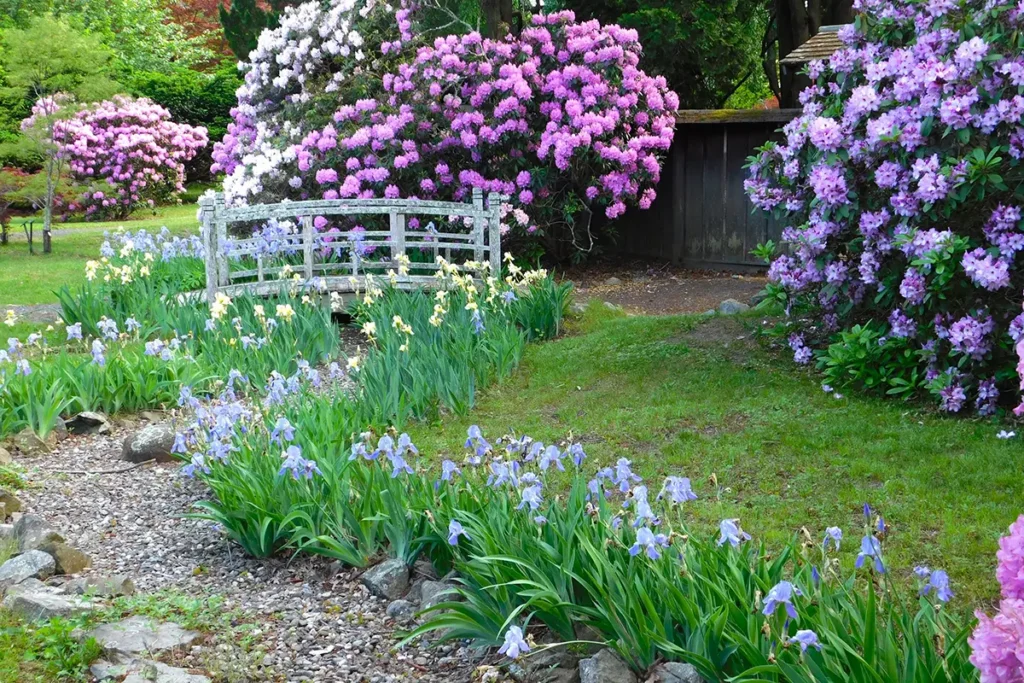
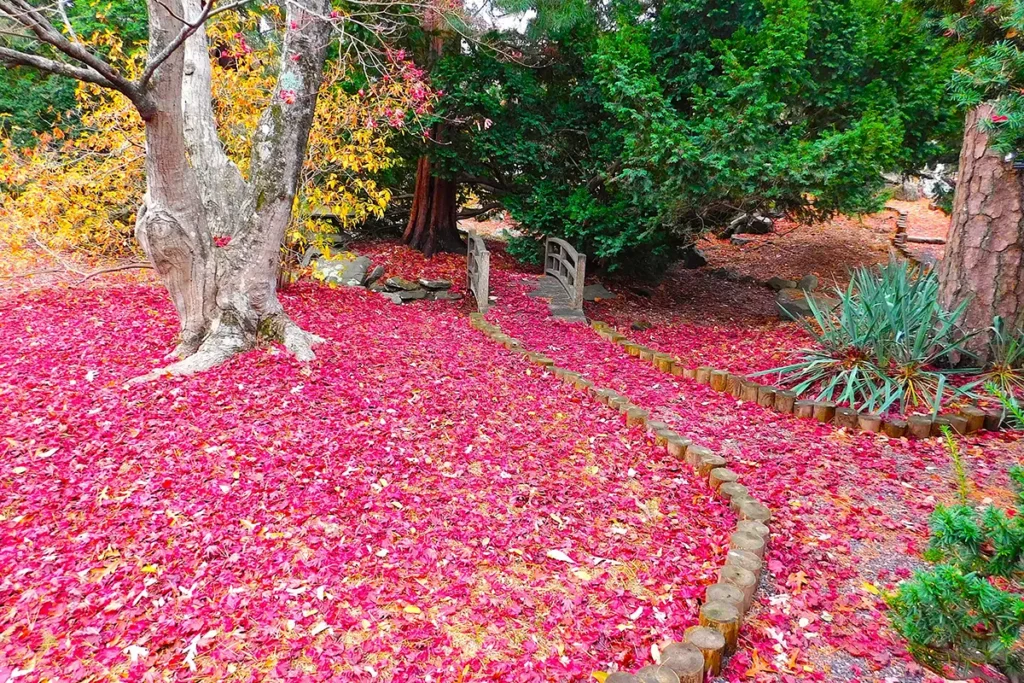
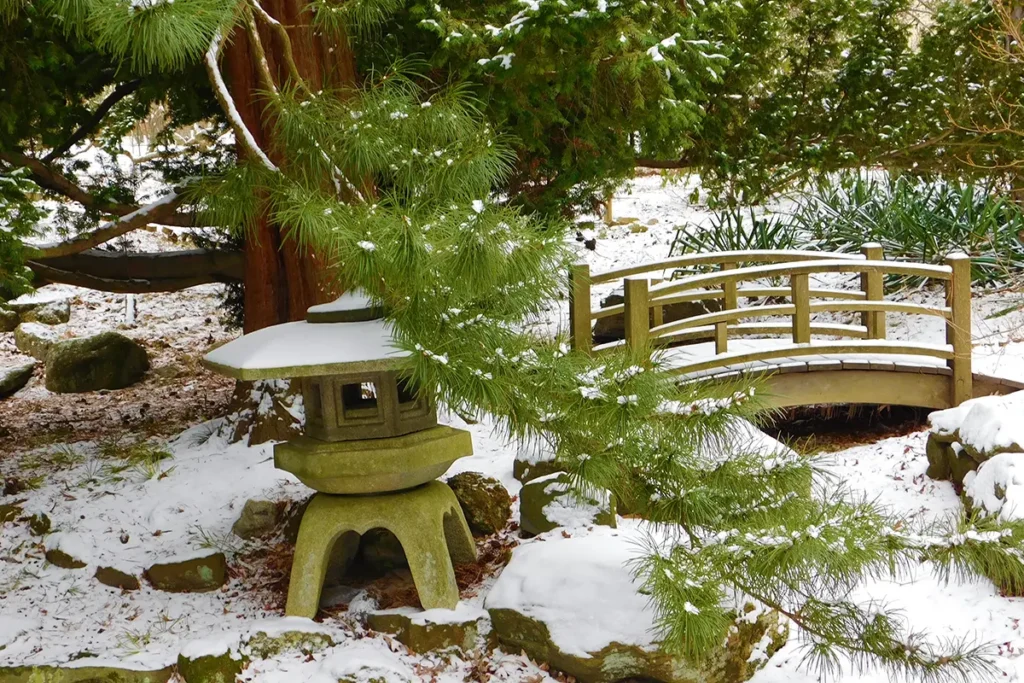
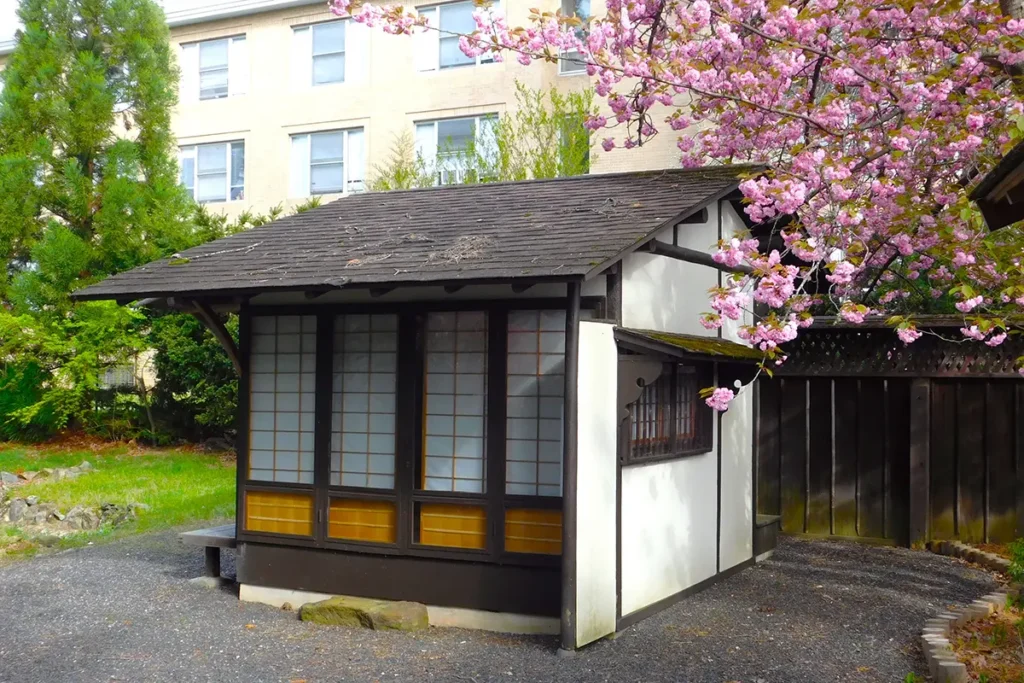
The four historic gardens remain among its most beloved features. The lakeside Sunken Garden, with marble stairways and a 17th-century fountain, overlooks a lagoon dotted with waterlilies. The Italian and Formal gardens offer symmetrical paths, sculptures, and seasonal color. The Japanese Garden—complete with teahouse, wooden bridges, waterfall, and plantings of cherry, maple, cypress, and yew—remains a place of quiet reflection.
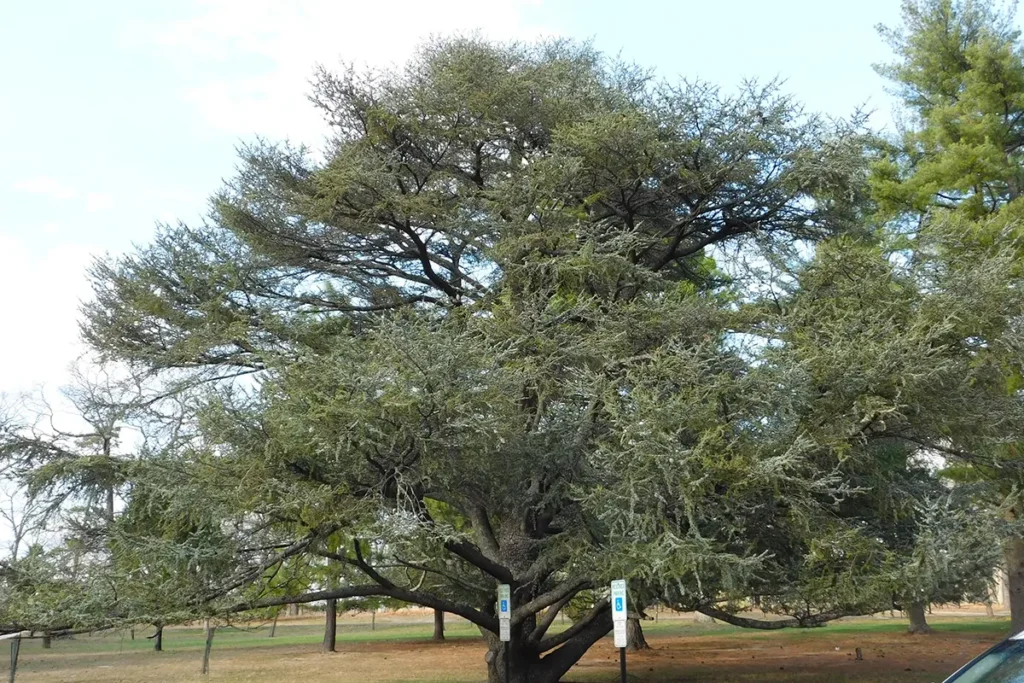
Beyond the gardens, the arboretum includes notable specimens, such as a massive white oak estimated to be more than 250 years old, and distinctive Gould-era plantings, such as the Atlas blue cedar. Many of the trees are among the oldest and largest in Ocean County.
Stewardship, Study, and Recognition
ArbNet reaccreditation affirms that the arboretum is thoughtfully maintained and actively used as an educational resource. Level II accreditation recognizes institutions that demonstrate professional collections management, public accessibility, and engagement in education and conservation.
“For the public, accreditation means they’re walking through a collection that’s accurate and well cared for,” Gross says. “For the university, it’s recognition of the long-term commitment to stewardship and education that’s been there from the beginning.”
The arboretum is also a member of the American Public Gardens Association and the North American Japanese Garden Association, and helped found the Garden State Gardens Consortium, a network of 30 New Jersey public gardens established in 2008 to increase public awareness and appreciation of their beauty, horticultural, educational, artistic, and historic value.

Yet for Stockton, the arboretum’s true value lies in its continuity.
“It means a lot to me to know that people will continue to come here and enjoy the grounds,” she says. “My hope has always been that there will be someone with the interest and the knowledge to keep caring for it, so future generations can experience it the way we did.”
More than 35 years after its dedication, and more than a century after its first trees were planted, the Sister Mary Grace Burns Arboretum remains exactly what its founders envisioned: a place where history, science, beauty, and education grow together.