
Medical Imaging Sciences/Sonography
Discover Your Future in Medical Imaging
Are you fascinated by healthcare and technology? Do you want to make a real difference in patient care-without becoming a doctor or nurse? A degree in Medical Imaging Sciences at Georgian Court University (GCU) could be the perfect fit for you.
This program prepares you for a high-demand career in medical imaging. You’ll gain hands-on experience, study cutting-edge medical technology, and graduate ready to step into one of the fastest-growing fields in healthcare.
What Is Medical Imaging Sciences?
Medical Imaging Sciences is all about using advanced ultrasound technology to help doctors diagnose and treat patients. Professionals in this field are at the heart of modern healthcare, providing the sonography images and data that guide life-saving decisions.
Why Study Medical Imaging at Georgian Court University?
Support Every Step of the Way
From your first day on campus to graduation, you’ll find advisors and mentors who are truly invested in your academic and personal success.
Hands-On Learning Opportunities
Our program emphasizes real-world experience, so you’ll have plenty of chances to practice your skills in labs and clinical settings before you graduate.
Collaborative Campus Culture
At GCU, you’ll join a diverse community where students work together, share ideas, and build lasting friendships inside and outside the classroom.
Pathways to Professional Growth
With guidance on internships, certification, and career planning, you’ll be prepared to take the next step-whether that’s entering the workforce or pursuing further education.
Medical Imaging Sciences Program Highlights
The GCU Advantage
- Specialization Options: Choose the path that fits your interests and career goals: Cardiovascular Sonography or Diagnostic Medical Sonography.
- Real-World Clinical Experience: Get hands-on training at leading hospitals and imaging centers throughout New Jersey and the surrounding region, preparing you for immediate entry into the workforce.
- Choice of two clinical partner schools: Choose to do your clinical training at either of our partner schools: Rutgers School of Health Professions in Newark, NJ or Medical Career Institute (MCI) of NJ in Ocean Township, NJ.
The GCU Experience
- Personalized Support: With an 11:1 student-to-faculty ratio, you’ll receive individual attention and mentoring from professors who care about your success.
- Generous Financial Aid: 99% of freshmen receive financial assistance, with an average award of over $39,000-making your education more affordable.
- Prime Location: Study in Lakewood, NJ, just a short drive from the Jersey Shore, New York City, and Philadelphia, giving you access to top healthcare employers and vibrant city life.
High-Demand Careers in Medical Imaging
A Bachelor’s Degree in Medical Imaging Sciences from Georgian Court University opens the door to a wide range of rewarding healthcare careers. Medical imaging professionals are essential members of the healthcare team, using advanced technology to help diagnose, monitor, and treat patients.
Diagnostic Medical Sonographer
- What They Do: Operate ultrasound equipment to produce images of organs and tissues, assisting physicians in diagnosing medical conditions.
- Median Salary (2024): $84,410 per year
- Job Growth: Projected to grow 10% from 2022 to 2032-much faster than average for all occupations.
- Work Settings: Hospitals, outpatient care centers, physician offices, diagnostic laboratories.
Cardiovascular Sonographer (Echocardiographer)
- What They Do: Specialize in imaging the heart and blood vessels to help diagnose cardiovascular conditions.
- Median Salary (2024): $78,210 per year
- Job Growth: Projected at 10% over the next decade.
- Work Settings: Hospitals, heart and vascular centers, clinics, private practices.
Obstetric Sonographer
- What They Do: Specialize in imaging the fetus, placenta, and amniotic fluid during pregnancy to monitor fetal development and detect abnormalities.
- Median Salary (2024): $82,790 per year
- Job Growth: Projected at 10% over the next decade.
- Work Settings: Hospitals, obstetrician offices, maternal-fetal medicine centers, prenatal clinics.
Why Choose a Career in Medical Imaging?
- Competitive Salaries: Most roles offer salaries well above the national average for all occupations.
- Job Security: The aging population and advances in medical technology are driving demand for skilled imaging professionals.
- Flexible Work Environments: Opportunities exist in hospitals, clinics, research labs, and even mobile imaging units.
- Meaningful Work: You’ll play a vital role in patient care and diagnosis, making a real impact every day.
Certification and Advancement
Graduates are prepared to sit for national certification exams, such as those offered by the American Registry for Diagnostic Medical Sonography (ARDMS) or Cardiovascular Credentialing International (CCI). With experience, medical imaging professionals can advance into supervisory, educational, or specialized clinical roles.
Local and Regional Opportunities
With GCU’s prime location near the Jersey Shore, New York City, and Philadelphia, graduates have access to some of the nation’s top hospitals and healthcare employers-including Hackensack Meridian Health, RWJBarnabas Health, and Penn Medicine.
Sources:
- U.S. Bureau of Labor Statistics, Occupational Outlook Handbook (2024–2025): Diagnostic Medical Sonographers, MRI Technologists, Radiologic Technologists
Program Overview
The Medical Imaging Sciences program has two options:
Option 1: 2½+1½ track with MCI:
- First 5 semesters at GCU: Complete foundational science courses and GCU general education requirements.
- Apply to MCI: In your sophomore year, apply to MCI and select your specialty
- Specialty training at MCI: Spend 18 months (3 semesters) doing clinical coursework and clinical rotations in your chosen field
- Graduate with a BA in Biology with a Medical Imaging Sciences track from GCU
Option 2: 2+2 track with Rutgers:
- Years 1–2 at GCU: Complete foundational science courses and general education requirements.
- Apply to Rutgers: In your sophomore year, apply to the Rutgers School of Health Professions and select your specialty.
- Specialty Training at Rutgers: Spend 2 years at Rutgers (Newark campus) focusing on your chosen field.
- Graduate with a B.S.: Upon completion, you’ll receive a Bachelor of Science in Medical Imaging Sciences from Rutgers.
Specializations Available for Both Options:
- Cardiovascular Sonography: Learn to use ultrasound to assess heart and blood vessel health.
- Diagnostic Medical Sonography: Become an expert in general and specialized ultrasound imaging.
Note: Acceptance to clinical training at MCI or Rutgers is competitive. Discuss specific admissions requirements with your academic advisor.
What Will You Learn?
- Core Sciences: Biology (including Anatomy and Physiology), Chemistry, and Physics.
- Imaging Technology: Hands-on experience with the latest medical imaging equipment.
- Patient Care: Learn to work directly with patients and healthcare teams.
- Clinical Rotations: Real-world experience in hospitals and clinics, building your skills and professional network.
Why Choose GCU?
-
Close-Knit Campus
Small classes, supportive professors, and a beautiful campus environment. -
Prime Location
Study near the Jersey Shore with access to opportunities in New York City and Philadelphia, both just one hour from campus. -
Financial Support
99% of undergraduate students receives financial aid. -
Career Connections
Our partnerships with MCI and Rutgers and proximity to major healthcare centers give you a head start on your career.
Shape Your Future in
Medical Imaging
Need to
learn more?
Frequently Asked Questions
Q: What is the difference between cardiovascular and diagnostic medical sonography?
A: Cardiovascular sonography focuses on imaging the heart and blood vessels, while diagnostic medical sonography covers a broader range of organs and tissues and also includes monitoring fetal health during pregnancy.
Q: Where will I complete my clinical rotations?
A: Clinical placements are arranged through Rutgers and MCI at top hospitals and imaging centers in New Jersey and the surrounding region.
Q: Will I be eligible for certification after graduation?
A: Yes! Graduates are prepared to sit for national certification exams in their chosen specialty.
Q: Can transfer students apply?
A: Absolutely. We welcome transfer students and will work with you to maximize your eligible credits.
Medical Imaging Sciences Program Information
Medical Imaging Sciences Curriculum
At GCU, students take a specific set of science courses and complete their general education requirements. This typically adds up to a total of 60 to 75 credits or more depending on the specific pathway selected. In their sophomore year (consult with advisor and Rutgers University/MCI websites for deadline dates), the student applies to Medical Career Institute of NJ or to the Rutgers University’s School of Health Professions. The student chooses one of the following specialties: cardiovascular sonography or diagnostic medical sonography. If accepted, the student spends 2 years taking the specialized courses (60 credits) in the field of study at Rutgers University or 18 months (48 credits) at MCI. At the conclusion of the period of study at Rutgers University, the student earns a Bachelor of Science in Medical Imaging Sciences, awarded by Rutgers University. For students completing clinical training at MCI, they earn a Bachelor of Arts in Biology with a Medical Imaging Science track from GCU.
GCU does not guarantee acceptance into any Rutgers University program or MCI program. Program admission is competitive.
To earn this degree, students must successfully complete at least 120 credits, including the major requirements below.
To earn this degree, students must successfully complete at least 120 credits, including General Education requirements and the major requirements below.
Major Sequence
For the B.A. degree, a minimum of 9 credits of biology coursework must be taken at the 300 or 400 level.
For students seeking teacher certification, in addition to the core of required courses for the biology degree, the department recommends the following courses: BI213 Human Anatomy & Physiology I and BI214 Human Anatomy & Physiology II. For Teacher of Biology (K-12) certification, at least 12 credits must be taken at the 300 or 400 level.
It is recommended that students who have completed General Biology I, II, at another institution, take BI320 Cell Biology in place of BI121 Cellular Organiz., Energetics & Function to satisfy their cell biology requirement.
All biology majors who have completed 16 credits of Georgian Court biology courses will have their status reviewed by the biology faculty members. Those with a Georgian Court biology GPA of less than 2.50 may be advised and required to change their major. A Georgian Court biology GPA of 2.50 is required for graduation.
All majors pursuing the B.S. or B.A. degree in Biology are required to take a department-administered Major Field Test before graduation.
Course Requirements (except for Medical Laboratory Science Track and Medical Imaging Science Track)
A minimum of 30 biology credits, plus courses in related areas, including:
| Code | Title | Credits |
|---|---|---|
| Biology Courses | ||
| BI120 | Biological Diversity & Phylogeny | 4.0 |
| BI121 | Cellular Organiz., Energetics & Function | 4.0 |
| BI201 | Biological Literature | 1.0 |
| BI204 | Genetics & Evolution | 4.0 |
| Select one of the following: | 3.0-4.0 | |
BI305 | Biological Interactions: Ecology (4 credits) | |
BI310 | Ecology & Health (3 credits) | |
| BI443 | Capstone in Biology: BA | 2.0 |
| or BI444 | Capstone in Biology: BS | |
| Biology electives | 12.0-13.0 | |
| Related Courses | ||
| Select one of the following: 1 | 3.0-4.0 | |
MA109 | College Algebra | |
MA110 | Precalculus | |
MA115 | Calculus I | |
MA116 | Calculus II | |
| CH113 | General Chemistry I | 4.0 |
| CH114 | General Chemistry II | 4.0 |
| CH223 | Organic Chemistry I | 4.0 |
| Select one of the following sequences: 1 | 8.0 | |
PH111 & PH112 | Physics in Everyday Life I and Physics in Everyday Life II | |
PH115 & PH116 | College Physics I and College Physics II | |
PH121 & PH122 | University Physics I and University Physics II | |
| Total Credits | 53.0-56.0 | |
- 1
Students electing for PH115 College Physics I must take MA110 Precalculus. Students electing for PH121 University Physics I must take MA115 Calculus I. Students preparing for professional careers or graduate school are strongly advised to take PH121 University Physics I and PH122 University Physics II.
Requirements for Medical Laboratory Science Track
A minimum of 40 credits including:
| Code | Title | Credits |
|---|---|---|
| BI121 | Cellular Organiz., Energetics & Function | 4.0 |
| BI201 | Biological Literature | 1.0 |
| BI204 | Genetics & Evolution | 4.0 |
| BI213 | Human Anatomy & Physiology I | 4.0 |
| BI214 | Human Anatomy & Physiology II | 4.0 |
| BI219 | Microbiology | 4.0 |
| BI401 | Medical Technology Internship I | 16.0 |
| BI402 | Medical Technology Internship II | 16.0 |
| Select one of the following: | 3.0-4.0 | |
BI427 | Immunology (4 credits) | |
BI428 | Fundamentals of Immunology (3 credits) | |
| BI437 | Biochemistry I | 4.0 |
| BI443 | Capstone in Biology: BA | 2.0 |
| or BI444 | Capstone in Biology: BS | |
| Related Courses | ||
| Select one of the following: 1 | 3.0-4.0 | |
MA109 | College Algebra | |
MA110 | Precalculus | |
MA115 | Calculus I | |
MA116 | Calculus II | |
| CH113 | General Chemistry I | 4.0 |
| CH114 | General Chemistry II | 4.0 |
| CH223 | Organic Chemistry I | 4.0 |
| CH224 | Organic Chemistry II | 4.0 |
| Select one of the following sequences: 1 | ||
PH111 & PH112 | Physics in Everyday Life I and Physics in Everyday Life II | |
PH115 & PH116 | College Physics I and College Physics II | |
PH121 & PH122 | University Physics I and University Physics II | |
| Total Credits | 81.0-83.0 | |
- 1
Students electing for PH115 College Physics I must take MA110 Precalculus. Students electing for PH121 University Physics I must take MA115 Calculus I. Students preparing for professional careers or graduate school are strongly advised to take PH121 University Physics I and PH122 University Physics II.
Requirements for MCI Medical Imaging Track (for students who will take sonography courses at Medical Career Institute of NJ)
A minimum of 40 credits including:
| Code | Title | Credits |
|---|---|---|
| Biology Courses | ||
| BI121 | Cellular Organiz., Energetics & Function | 4.0 |
| BI204 | Genetics & Evolution | 4.0 |
| BI213 | Human Anatomy & Physiology I | 4.0 |
| BI214 | Human Anatomy & Physiology II | 4.0 |
| BI431 | Clinical Sonography Internship I | 16.0 |
| BI432 | Clinical Sonography Internship II | 16.0 |
| BI433 | Clinical Sonography Internship III | 16.0 |
| Related Courses | ||
| MA103 | Introduction to Statistical Thinking | 3.0 |
| Select one of the following: 1 | 3.0-4.0 | |
MA109 | College Algebra | |
MA110 | Precalculus | |
MA115 | Calculus I | |
MA116 | Calculus II | |
| CH113 | General Chemistry I | 4.0 |
| or CH151 | Chemistry for the Health Sciences | |
| Select one of the following sequences: 1 | 8.0 | |
PH111 & PH112 | Physics in Everyday Life I and Physics in Everyday Life II | |
PH115 & PH116 | College Physics I and College Physics II | |
PH121 & PH122 | University Physics I and University Physics II | |
| Total Credits | 82.0-83.0 | |
- 1
Students electing for PH115 College Physics I must take MA110 Precalculus. Students electing for PH121 University Physics I must take MA115 Calculus I. Students preparing for professional careers or graduate school are strongly advised to take PH121 University Physics I and PH122 University Physics II.
Requirements for Pre-Medical Imaging Sciences Track (for students who transfer to Rutgers University to earn a Rutgers University B.S. in Medical Imaging Sciences degree)
This course list is only for students who transfer to Rutgers to earn a B.S. in Medical Imaging Sciences degree. Students transferring to Rutgers for this program must earn at least 60 credits before transferring (i.e., those exempt from GEN101 and/or GEN199 due to GCU transfer policy must reach 60 earned credits using credits from additional courses). GCU does not award a degree in Medical Imaging Sciences. Students who complete the course list below but do not transfer to Rutgers University and instead plan to graduate from GCU must complete requirements for the appropriate GCU degree program. If they wish to earn a B.A. in Biology degree, they must complete the B.A. in Biology degree requirements (including GCU general education requirements not met through the list of courses below, e.g., GEN400, Creative Thinking & Expression, Intercultural Understanding & Intercultural Communication).
| Code | Title | Credits |
|---|---|---|
| BI213 | Human Anatomy & Physiology I (Rutgers GenEd NatSci) | 4.0 |
| BI214 | Human Anatomy & Physiology II (Rutgers GenEd NatSci) | 4.0 |
| BI219 | Microbiology (Rutgers GenEd NatSci) | 4.0 |
| CH151 | Chemistry for the Health Sciences (Rutgers GenEd NatSci) | 4.0 |
| or CH113 | General Chemistry I | |
| PH111 | Physics in Everyday Life I (Rutgers GenEd NatSci) | 4.0 |
| or PH112 | Physics in Everyday Life II | |
| MA109 | College Algebra (Rutgers GenEd Quantitative) | 3.0 |
| EN111 | Writing, Research, and Digital Literacy (Rutgers GenEd Writing&Comm) | 3.0 |
| EN112 | Academic Writing and Research II (Rutgers GenEd Writing&Comm) | 3.0 |
| PS111 | Introduction to Psychology (Rutgers GenEd SocialSci) | 3.0 |
| HRP200 | Medical Terminology (Rutgers GenEd Writing&Comm) | 3.0 |
| MA103 | Introduction to Statistical Thinking (Rutgers GenEd Quantitative) | 3.0 |
| Literature (Rutgers GenEd Art&Humanities) | 3.0 | |
| Religion (Rutgers GenEd Art&Humanities) | 3.0 | |
| Ethics (Rutgers GenEd SocialSci) | 3.0 | |
| History (Rutgers GenEd History,Lit&Contemp) | 3.0 | |
| GPS311 | Gender, Power, &Society:Voices of Change (Rutgers GenEd History,Lit&Contemp) | 3.0 |
| GEN101 | Pathway to the Bridge | 2.0 |
| GEN199 | WI:Discovering Self in the Universe | 3.0 |
| Electives (as needed to reach 60cr earned) | 2.0 | |
| Total Credits | 60.0 | |
For more information on program requirements, consult the Undergraduate Catalog.
Department of Biology, Biochemistry, & Chemistry Faculty

Carolyn A. Bergman, Ph.D.
Associate Professor & Chair of Biology
School of Business, Education, Liberal Arts, & Sciences
Jeffries Hall (203)
[email protected]
732-987-2372

Brunella Bowditch, Ph.D.
Associate Professor of Biology
School of Business, Education, Liberal Arts, & Sciences
Jeffries Hall (202)
[email protected]
732-987-2377
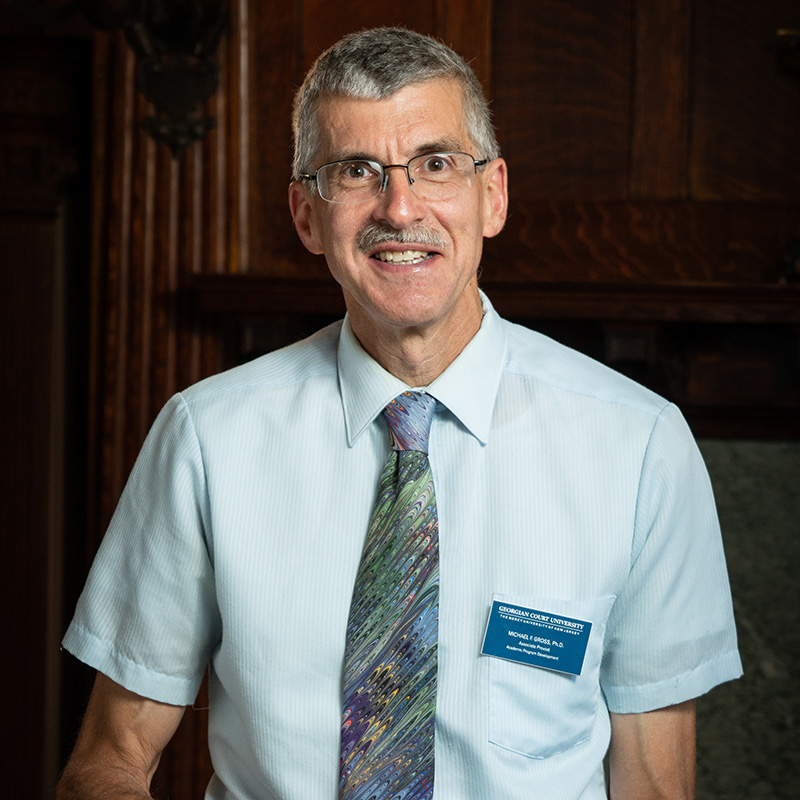
Michael F. Gross, Ph.D.
Professor of Biology & Assistant Vice President for Academic Affairs
School of Business, Education, Liberal Arts, & Sciences
Jeffries Hall (112)
[email protected]
732-987-2373

Jessica A. Lisa, Ph.D.
Assistant Professor of Biology
School of Business, Education, Liberal Arts, & Sciences
Jeffries Hall
[email protected]

Jean Parry, Ph.D.
Associate Professor
School of Business, Education, Liberal Arts, & Sciences
Jeffries Hall (136)
[email protected]
732-987-2370
Related Programs
Biology, B.S.
Explore the science of living organisms, from cells and genetics to ecosystems, preparing for careers in research, healthcare, or graduate study.
Biochemistry, B.S.
Combine biology and chemistry to understand the molecular basis of life, laying the groundwork for careers in medicine, pharmaceuticals, or laboratory research.
Chemistry, B.S.
Study the properties and reactions of matter, gaining hands-on laboratory experience that prepares you for work in healthcare, industry, or advanced study.
Health Sciences, B.S.
Gain a broad foundation in health, wellness, and disease, with flexible pathways to careers in healthcare administration, health education, or allied health professions.
Nursing, B.S.N.
Prepare for a rewarding career as a registered nurse through a rigorous curriculum that combines classroom learning with extensive clinical experience.
Psychology, B.A.
Examine human behavior and mental processes, developing skills for careers in counseling, social services, or further graduate study.
Exercise Science, Wellness & Sports, B.S.
Focus on human movement, fitness, and health promotion, preparing for roles in exercise physiology, wellness coaching, or sports management.
Clinical Laboratory Sciences, B.S. (Joint program with Rutgers SHP)
Train to become a clinical laboratory scientist, performing diagnostic tests that are vital to patient care in hospitals and medical labs.
Ready to take the next step? Request more information or start your application today and discover where a Degree in Medical Imaging Sciences from Georgian Court University can take you.
Have questions? Contact us
Georgian Court University
900 Lakewood Avenue
Lakewood, NJ 08701
Campus Map
Contact Information
Office of Undergraduate Admissions
Phone: 732-987-2700
E-mail: [email protected]
Office Hours
- Monday-Friday: 8:30 a.m. – 4:30 p.m.
- Saturday: *By appointment only
- Sunday: Closed
*Check tour schedule for specific dates/times.