Biology

Bachelor of
Science in
Biology

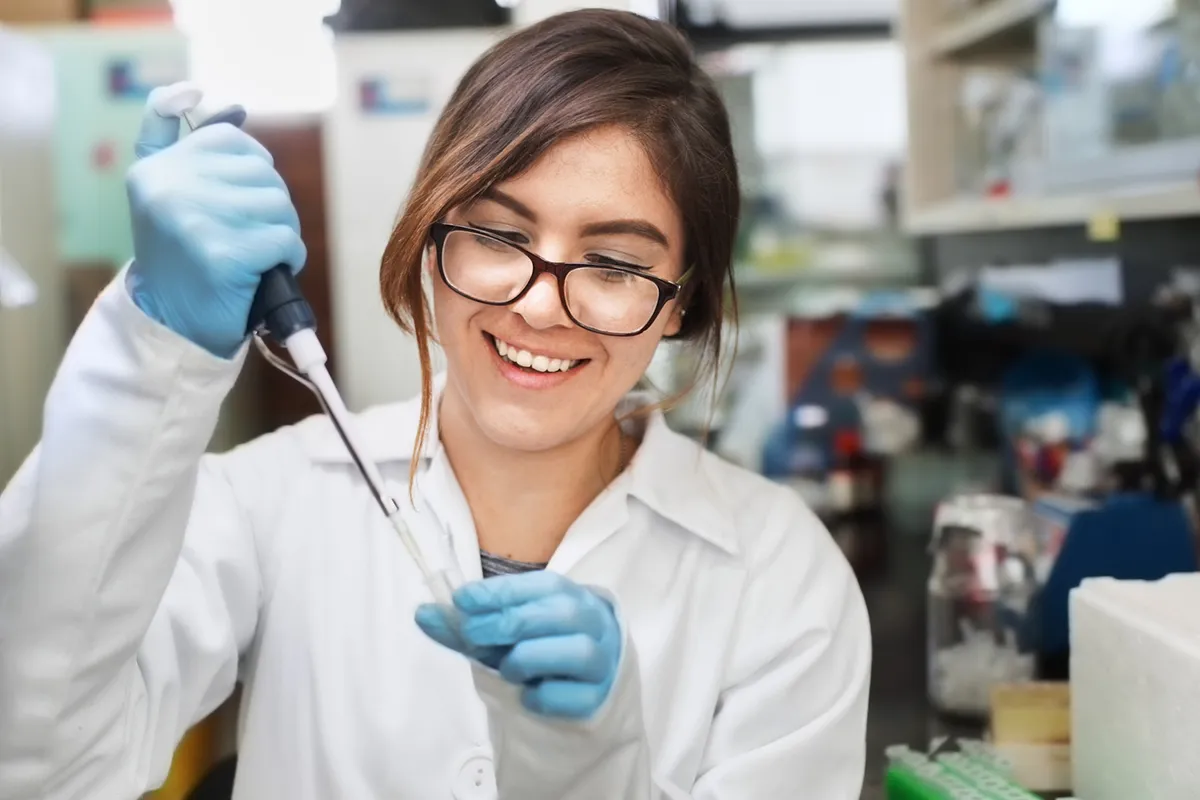
A woman in a laboratory wearing a lab coat
A woman looking into a microscope

Biology is the study of life—a science that focuses on living organisms and their origin, evolution, growth, reproduction, structure, and behavior.

There are many different fields of biology, including anatomy, marine biology, physiology, ecology, immunology, evolution, health and medicine, zoology, microbiology, genetics, molecular biology, and botany.

Since the fields within biology are wide ranging and diverse, so are biology jobs. And since 14 of the largest 20 pharmaceutical companies in the world and over 350 biotech companies call New Jersey home, our students often find internships, networking opportunities, and career opportunities close to home.

Georgian Court offers both a B.A. in Biology for students who want to teach at the pre-college level and a B.S. in Biology for other career paths. If you wish to teach at the pre-college level, biology will be your first major and education will be your second major after fulfilling School of Business, Education, Liberal Arts, & Sciences requirements for teacher certification.

"Why explore biology at GCU? Whether you’re planning a career in medicine, industry, or the environmental sciences, our expert faculty are ready to guide you. You can expect a warm, individualized experience where everyone knows your name and career goals. A faculty advisor will help guide you every step of the way from selecting classes to finding an amazing internship or research experience with one of our research-active faculty. I look forward to getting to know you and helping you achieve an amazing career!"
Jean Parry
Jean Parry
Assistant Professor
Ph.D., Cellular and Developmental Biology and Genetics

Why Study Biology at GCU?

Biology students working with chemistry drugs for a pharmacy experiment

What Students Might Be Interested in Biology?

Students with a passion for helping people, animals, and the planet who enjoy research, technology, nature, discovery, and solving complex problems are a great fit for a biology degree. Most scientists are creative, disciplined, analytical, and naturally curious.

Group of scientists working in a laboratory

What Can I do with a Biology Degree?

A bachelor’s degree in biology can lead directly to careers in biomedical research, pharmaceutical development and testing, sales, education (requires coursework for teacher certification), journalism, and more. Some students pursue a biology major to prepare for medical, veterinarian, dental, and other healthcare schools while others choose master’s or doctoral programs to specialize in a specific area of biology or a related fields like biomedical engineering or genetic counseling. A sampling of careers and median annual salaries from the U.S. Bureau of Labor Statistics are shown below. Note: Biology jobs that require a double major, minor, or an advanced degree and additional certifications and licensures are marked with an asterisk:

  • Clinical lab technician - $57,800
  • High school teacher* - $61,820
  • Environmental scientist - $76,530
  • Microbiologist* - $79,260
  • Genetic counselor* - $80,150
  • Medical research scientist* - $95,310
  • Veterinarian* - $100,370
  • Physician Assistant* - $121,530
  • Pharmacist* - $128,570
  • Physician* - $208,000

B.A. and B.S. in Biology Program Information

You’ll need to successfully complete at least 120 credits, including General Education requirements and 40 credits in biology (for the B.S.) and 30 credits in biology (for the B.A.) plus courses in related areas (e.g., chemistry, math, physics).

To earn this degree, students must successfully complete at least 120 credits, including General Education requirements and the major requirements below.

Major Sequence

For the B.S. degree in all tracks, a minimum of 12 credits of biology coursework must be taken at the 300 or 400 level.

For students seeking teacher certification, in addition to the core of required courses for the biology degree, the department recommends the following courses: BI213 Human Anatomy & Physiology I and BI214 Human Anatomy & Physiology II. For Teacher of Biology (K-12) certification, at least 12 credits must be taken at the 300 or 400 level. 

It is recommended that students who have completed General Biology I, II, at another institution, take BI320 Cell Biology in place of BI121 Cellular Organiz., Energetics & Function to satisfy their cell biology requirement.

All biology majors who have completed 16 credits of Georgian Court biology courses will have their status reviewed by the biology faculty members. Those with a Georgian Court biology GPA of less than 2.50 may be advised and required to change their major. A Georgian Court biology GPA of 2.50 is required for graduation.

All majors pursuing the B.S. or B.A. degree in Biology are required to take a department-administered Major Field Test before graduation.

Course Requirements (except for Medical Laboratory Science Track):

A minimum of 40 biology credits, plus courses in related areas, including:

Course List
Code Title Credits
Biology Courses
BI120Biological Diversity & Phylogeny4.0
BI121Cellular Organiz., Energetics & Function4.0
BI201Biological Literature1.0
BI204Genetics & Evolution4.0
Select one of the following:3.0-4.0
BI305
Biological Interactions: Ecology (4 credits)
BI310
Ecology & Health (3 credits)
BI444Capstone in Biology: BS2.0
Biology electives21.0-22.0
Related Courses
Select one of the following: 13.0-4.0
MA110
Precalculus
MA115
Calculus I
MA116
Calculus II
CH113General Chemistry I4.0
CH114General Chemistry II4.0
CH223Organic Chemistry I4.0
CH224Organic Chemistry II4.0
Select one of the following sequences:8.0
PH115
PH116
College Physics I
and College Physics II
PH121
PH122
University Physics I
and University Physics II 2
Total Credits66.0-69.0
1

Students preparing for professional careers that require calculus are strongly advised to also take MA115 Calculus I and MA116 Calculus II.

2

Students electing for PH121 University Physics I must take MA115 Calculus I.

For the Medical Laboratory Science Track, either MA103 Introduction to Statistical Thinking or SO201 Social and Crime Statistics is also required. For the Pre-Med Track, either PS111 Introduction to Psychology or PS113 Foundations of Psychology, and SO101 Principles of Sociology are required.

Requirements for the Pre-Med Track Within the B.S. in Biology Degree

Course List
Code Title Credits
BI310Ecology & Health3.0
BI437/CH311Biochemistry I4.0
Any Microbiology course4.0

Requirements for Medical Laboratory Science Track

Course List
Code Title Credits
BI121Cellular Organiz., Energetics & Function4.0
BI201Biological Literature1.0
BI204Genetics & Evolution4.0
BI213Human Anatomy & Physiology I4.0
BI214Human Anatomy & Physiology II4.0
BI219Microbiology4.0
BI401Medical Technology Internship I16.0
BI402Medical Technology Internship II16.0
Select one of the following:3.0-4.0
BI427
Immunology (4 credits)
BI428
Fundamentals of Immunology (3 credits)
BI437Biochemistry I4.0
BI444Capstone in Biology: BS2.0
Related Courses
Select one of the following: 13.0-4.0
MA110
Precalculus
MA115
Calculus I
MA116
Calculus II
CH113General Chemistry I4.0
CH114General Chemistry II4.0
CH223Organic Chemistry I4.0
CH224Organic Chemistry II4.0
Select one of the following sequences:8.0
PH115
PH116
College Physics I
and College Physics II
PH121
PH122
University Physics I
and University Physics II 2
Total Credits89.0-91.0
1

Students preparing for professional careers that require calculus are strongly advised to also take MA115 Calculus I and MA116 Calculus II.

2

Students electing for PH121 University Physics I must take MA115 Calculus I.


For more information on program requirements, consult the Undergraduate Catalog.

To earn this degree, students must successfully complete at least 120 credits, including General Education requirements and the major requirements below.

Major Sequence

For the B.A. degree, a minimum of 9 credits of biology coursework must be taken at the 300 or 400 level.

For students seeking teacher certification, in addition to the core of required courses for the biology degree, the department recommends the following courses: BI213 Human Anatomy & Physiology I and BI214 Human Anatomy & Physiology II. For Teacher of Biology (K-12) certification, at least 12 credits must be taken at the 300 or 400 level. 

It is recommended that students who have completed General Biology I, II, at another institution, take BI320 Cell Biology in place of BI121 Cellular Organiz., Energetics & Function to satisfy their cell biology requirement.

All biology majors who have completed 16 credits of Georgian Court biology courses will have their status reviewed by the biology faculty members. Those with a Georgian Court biology GPA of less than 2.50 may be advised and required to change their major. A Georgian Court biology GPA of 2.50 is required for graduation.

All majors pursuing the B.S. or B.A. degree in Biology are required to take a department-administered Major Field Test before graduation.

Course Requirements (except for Medical Laboratory Science Track and Medical Imaging Science Track)

A minimum of 30 biology credits, plus courses in related areas, including:

Course List
Code Title Credits
Biology Courses
BI120Biological Diversity & Phylogeny4.0
BI121Cellular Organiz., Energetics & Function4.0
BI201Biological Literature1.0
BI204Genetics & Evolution4.0
Select one of the following:3.0-4.0
BI305
Biological Interactions: Ecology (4 credits)
BI310
Ecology & Health (3 credits)
BI443Capstone in Biology: BA2.0
or BI444 Capstone in Biology: BS
Biology electives12.0-13.0
Related Courses
Select one of the following: 13.0-4.0
MA109
College Algebra
MA110
Precalculus
MA115
Calculus I
MA116
Calculus II
CH113General Chemistry I4.0
CH114General Chemistry II4.0
CH223Organic Chemistry I4.0
Select one of the following sequences: 18.0
PH111
PH112
Physics in Everyday Life I
and Physics in Everyday Life II
PH115
PH116
College Physics I
and College Physics II
PH121
PH122
University Physics I
and University Physics II
Total Credits53.0-56.0
1

Students electing for PH115 College Physics I must take MA110 Precalculus. Students electing for PH121 University Physics I must take MA115 Calculus I. Students preparing for professional careers or graduate school are strongly advised to take PH121 University Physics I and PH122 University Physics II.

Requirements for Medical Laboratory Science Track

A minimum of 40 credits including:

Course List
Code Title Credits
BI121Cellular Organiz., Energetics & Function4.0
BI201Biological Literature1.0
BI204Genetics & Evolution4.0
BI213Human Anatomy & Physiology I4.0
BI214Human Anatomy & Physiology II4.0
BI219Microbiology4.0
BI401Medical Technology Internship I16.0
BI402Medical Technology Internship II16.0
Select one of the following:3.0-4.0
BI427
Immunology (4 credits)
BI428
Fundamentals of Immunology (3 credits)
BI437Biochemistry I4.0
BI443Capstone in Biology: BA2.0
or BI444 Capstone in Biology: BS
Related Courses
Select one of the following: 13.0-4.0
MA109
College Algebra
MA110
Precalculus
MA115
Calculus I
MA116
Calculus II
CH113General Chemistry I4.0
CH114General Chemistry II4.0
CH223Organic Chemistry I4.0
CH224Organic Chemistry II4.0
Select one of the following sequences: 1
PH111
PH112
Physics in Everyday Life I
and Physics in Everyday Life II
PH115
PH116
College Physics I
and College Physics II
PH121
PH122
University Physics I
and University Physics II
Total Credits81.0-83.0
1

Students electing for PH115 College Physics I must take MA110 Precalculus. Students electing for PH121 University Physics I must take MA115 Calculus I. Students preparing for professional careers or graduate school are strongly advised to take PH121 University Physics I and PH122 University Physics II.


Requirements for MCI Medical Imaging Track (for students who will take sonography courses at Medical Career Institute of NJ)

A minimum of 40 credits including:

Course List
Code Title Credits
Biology Courses
BI121Cellular Organiz., Energetics & Function4.0
BI204Genetics & Evolution4.0
BI213Human Anatomy & Physiology I4.0
BI214Human Anatomy & Physiology II4.0
BI431Clinical Sonography Internship I16.0
BI432Clinical Sonography Internship II16.0
BI433Clinical Sonography Internship III16.0
Related Courses
MA103Introduction to Statistical Thinking3.0
Select one of the following: 13.0-4.0
MA109
College Algebra
MA110
Precalculus
MA115
Calculus I
MA116
Calculus II
CH113General Chemistry I4.0
or CH151 Chemistry for the Health Sciences
Select one of the following sequences: 18.0
PH111
PH112
Physics in Everyday Life I
and Physics in Everyday Life II
PH115
PH116
College Physics I
and College Physics II
PH121
PH122
University Physics I
and University Physics II
Total Credits82.0-83.0
1

Students electing for PH115 College Physics I must take MA110 Precalculus. Students electing for PH121 University Physics I must take MA115 Calculus I. Students preparing for professional careers or graduate school are strongly advised to take PH121 University Physics I and PH122 University Physics II.

Requirements for Pre-Medical Imaging Sciences Track (for students who transfer to Rutgers University to earn a Rutgers University B.S. in Medical Imaging Sciences degree)

This course list is only for students who transfer to Rutgers to earn a B.S. in Medical Imaging Sciences degree. Students transferring to Rutgers for this program must earn at least 60 credits before transferring (i.e., those exempt from GEN101 and/or GEN199 due to GCU transfer policy must reach 60 earned credits using credits from additional courses). GCU does not award a degree in Medical Imaging Sciences.  Students who complete the course list below but do not transfer to Rutgers University and instead plan to graduate from GCU must complete requirements for the appropriate GCU degree program. If they wish to earn a B.A. in Biology degree, they must complete the B.A. in Biology degree requirements (including GCU general education requirements not met through the list of courses below, e.g., GEN400, Creative Thinking & Expression, Intercultural Understanding & Intercultural Communication).  

Course List
Code Title Credits
BI213Human Anatomy & Physiology I (Rutgers GenEd NatSci)4.0
BI214Human Anatomy & Physiology II (Rutgers GenEd NatSci)4.0
BI219Microbiology (Rutgers GenEd NatSci)4.0
CH151Chemistry for the Health Sciences (Rutgers GenEd NatSci)4.0
or CH113 General Chemistry I
PH111Physics in Everyday Life I (Rutgers GenEd NatSci)4.0
or PH112 Physics in Everyday Life II
MA109College Algebra (Rutgers GenEd Quantitative)3.0
EN111Writing, Research, and Digital Literacy (Rutgers GenEd Writing&Comm)3.0
EN112Academic Writing and Research II (Rutgers GenEd Writing&Comm)3.0
PS111Introduction to Psychology (Rutgers GenEd SocialSci)3.0
HRP200Medical Terminology (Rutgers GenEd Writing&Comm)3.0
MA103Introduction to Statistical Thinking (Rutgers GenEd Quantitative)3.0
Literature (Rutgers GenEd Art&Humanities)3.0
Religion (Rutgers GenEd Art&Humanities)3.0
Ethics (Rutgers GenEd SocialSci)3.0
History (Rutgers GenEd History,Lit&Contemp)3.0
GPS311Gender, Power, &Society:Voices of Change (Rutgers GenEd History,Lit&Contemp)3.0
GEN101Pathway to the Bridge2.0
GEN199WI:Discovering Self in the Universe3.0
Electives (as needed to reach 60cr earned)2.0
Total Credits60.0
For more information on program requirements, consult the Undergraduate Catalog.

Complement your scientific expertise with a minor in biology from GCU. This focus pairs well with other health and science majors to offer the added advantage of a specialty that can be utilized in the medical and science fields.

Minor Sequence

A minimum of 23 biology credits is required with a maximum of 12 credits of 100-level biology courses counting toward the total. At least 11 of the 23 biology credits must be earned at Georgian Court. A minimum GPA of 2.0 in biology courses is required. Only biology courses with a grade of C- or higher will be included in the 23 biology credits needed for the minor. Also required are 4 credits of chemistry.


For more information on program requirements, consult the Undergraduate Catalog.

Students interested in the Medical Laboratory Science program at Jersey Shore University Medical Center or the Medical Laboratory Science program at Monmouth Medical Center can pursue the Medical Laboratory Science Track in either the B.A. or B.S. in Biology. Students follow the designated track at GCU for three years, following the recommendations of the American Society of Clinical Pathology. For the fourth year, students take courses in medical technology at an affiliated hospital for GCU biology credits. After passing a nationally administered examination, they become registered medical technologists (MT-ASCP).

COURSE ID#TITLEFALLSPRING
BI111Human BiologyXX
BI120Biological DiversityX
BI121Cell Organization, Energ, &FuncXX
BI201Biological LiteratureX
BI203Exp Design and StatisticsX
BI204Genetics and EvolutionXX
BI213Anatomy and Physiology 1XX
BI214Anatomy and Physiology 2XX
BI219MicrobiologyXX
BI310Ecology and HealthX
BI404Internship in BiologyXX
BI444Capston in BiologyX
BI446Research Problem in BiologyXX
BI490Developmental BiologyX

If you’re interested in our biology programs in the School of Business, Education, Liberal Arts, & Sciences, here are other programs at GCU you might be interested in exploring:

"The professors were outstanding—if you want to dive deeper, the resources are there. An internship at AtroZeneca and biochem research at GCU provided the hands-on experience to land a job after graduation and excel there."
A man with a beard wearing a suit
Joe Kaas ’17
Business Development Manager,
Cell & Gene Therapy Solutions Bio-Techne

Request More Info

Loading...

IMAGINE YOUR FUTURE AT

GEORGIAN COURT

LEARN HOW TO APPLY

We make applying easy. Get all the details on what you need to start your journey at GCU.

Visit Us

Seeing is believing. Take a look at our campus by driving, walking, or exploring our virtual tour.

GET MORE INFORMATION

Reach out to us and learn more about all GCU has to offer you.